

Dissertation Diary #4: So What? Part 3
Breaking down the urban ed context of my dissertation research site: Philadelphia

Philadelphia: the always-sunny city of Brotherly Love, the Tush-Push, and distinct neighborhoods. The exact count of neighborhoods is hard to pin down, though. A 1982 Inquirer piece laid out 150 pockets of the city, the shapefile available on OpenDataPhilly identifies 159 neighborhoods, and an interactive online article from the Inquirer in 2025 gamifies the debate over emerging nomenclature used by realtors versus everyday Philadelphians that pushes the tally to nearly 180. According to the School District of Philadelphia (SDP), there are 160 neighborhoods — that is, there are 160 unique catchment zones for elementary students in the city.
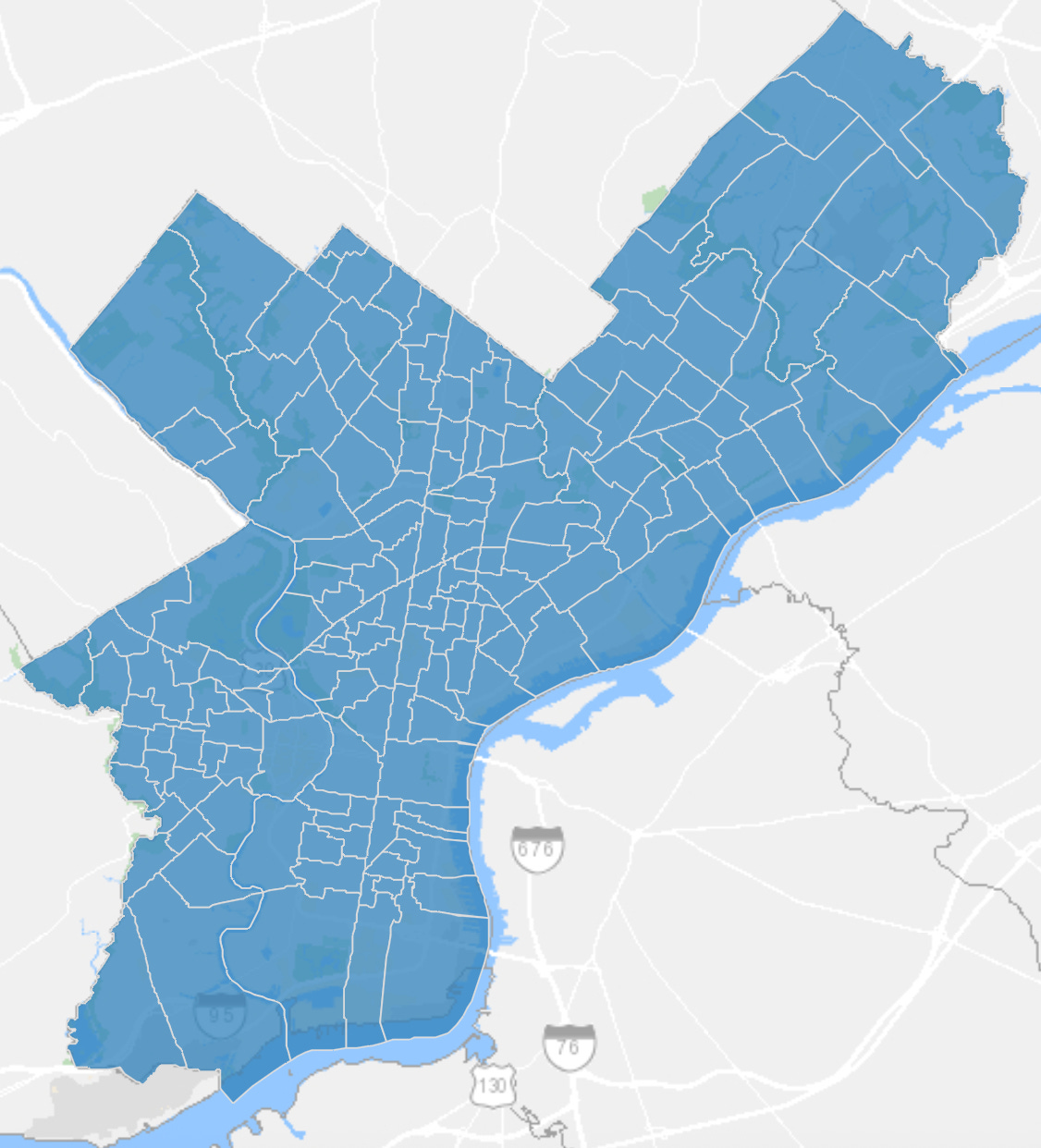
The history of education in Philadelphia, though, makes clear that the schools within these catchment zones do not, and maybe never really did, mirror the residential demographics of the neighborhoods. The long-standing patterns of school choice in the city may have aided in the blurring of neighborhood boundary lines and shifting perceptions of what qualifies as a neighborhood…thus making the case for setting the scene with a brief history of education in the city.
Late 1600s-2010s
Public, Catholic, and Quaker education have co-existed in Philadelphia since the mid-seventeenth century. William Penn opened the first Quaker school in 1689, and evidence of Catholic schooling is found at a similar time, though the parochial school system did not formally begin until the 1800s. And these three options continue to remain relevant in the schooling conversations around the city, thanks in large part to the Quaker schools’ commitment to offering scholarships and tuition support to eligible families1 and the Catholic schools’ resurgence with Independent Mission Schools who have capitalized on private philanthropy and PA’s Educational Improvement Tax Credit (EITC) and Opportunity Scholarship Tax Credit (OSTC) programs as a way to serve predominantly low-income families outside the constrictive (and steadily declining) archdiocese2.
And even within the public system, the city has a long history of embracing choice. SDP has allowed for intradistrict transfer — or choosing to attend a public school within the district that you are not residentially assigned to — for generations, whether through voluntary desegregation efforts or No Child Left Behind provisions. But by the early aughts, a new wave of choice policies and “reform” hit the district, starting with state takeover in 2001 due to poor performance and financial difficulties. Two such efforts are particularly relevant for contextualizing my dissertation: the Center City Schools Initiative (CCSI) and the Renaissance Initiative.
CCSI was studied in depth by sociologist Maia Cucchiara for her dissertation and subsequent book, Marketing Schools, Marketing Cities. The Center City District — a revitalization arm of City Hall that aimed to attract more business and higher-income residents to move into and stay rooted in Center City — partnered with SDP to improve neighborhood schools. As Cucchiara shows in her ethnography, the different priorities, expectations, and desires of newcomers vs longstanding families in the CCSI schools inspired complex operational challenges for school leaders and highlighted a larger citywide issue of class tensions. Other areas of the district have continued to experience changing demographics and the associated challenges with school culture and community as gentrification takes hold in neighborhoods far beyond the Center City limits — this reality may play a significant role in helping to explain why some neighborhoods retain so many students while others find their kids traveling to alternative educational options.
Renaissance Schools began in 2010. Unlike the CCSI which hoped to improve schools through an influx of district resources and eventual in-kind support from wealthier, more involved families, the Renaissance Initiative turned over the responsibility and management of low-performing schools to charter organizations. This meant that some traditional neighborhood public schools would now operate as a charter: local students living in the catchment would still be guaranteed a seat, but the reporting and operational requirements of being a district school would no longer apply to these schools. A popular program at first (up to 22 neighborhood schools became Renaissance Schools in its heyday), by 2016 the district stopped converting schools, and by 2024 nearly a quarter of Renaissance Schools have either closed or reverted back to district control (Chalkbeat has some excellent coverage on the fall of the Renaissance in Philly). Some of my preliminary analyses show that the current Renaissance elementary schools have some of the most geographically diverse student bodies, and the catchment neighborhoods whose schools have been turned over to charter organizations have some of the lowest opting-in to the neighborhood school, suggesting that this essentially defunct reform effort has sustaining impacts on neighborhood-school dynamics in the district.
And, of course, the avalanche of school closures in 20123 and the foreboding promise of a new round of shut-downs4 undoubtedly influence neighborhood-level decision-making and patterns of school enrollment choices.
Current Status
Since 2014, Philadelphia students have the option to apply online for a seat in another district school. In the 2024-2025 school year, more than half of all K-8 students enrolled in a school other than their assigned catchment school, though the distribution of in-catchment enrollment is unevenly distributed across all 213 public elementary schools (not just catchment, but also charter and citywide schools are included in this figure). There has also been a lot of changes in the selection process — in 2021, the special admissions application was overhauled in an effort to improve equity; this effort received a fierce backlash and the entire selection process — for special admission schools and all other district schools — has continued to change yearly5. The most recent iteration asks students/families to rank their top five school choices. If a student wants to go to their assigned catchment school, then they do *not* need to go through the school selection process; they can directly enroll at the neighborhood school.
Given the prevalence of catchment mobility in school enrollment, SDP is an ideal case through which to conduct my mixed methods study that examines out-of-catchment enrollment patterns and how teachers and administrators function in schools with geographically dispersed enrollment.
We’ve now walked through the theoretical and methodological underpinnings of the dissertation in Part 1 and Part 2, and contextualized the research site. All that’s left is to address the big enormous question of what is the role of schools in society and why should we care? Stay tuned for an attempt at that in Part 4 next week (and a preview of the Reader series that will start up later in January to further expand on this central question 👀🤓📚).
Lingering confusion? Pressing questions? Novel insight? General musings?
This is a pretty comprehensive summary of Catholic school education in Philly, thanks to WHYY’s Avi Wolfman-Arent (my trusted source for Philly ed stories, as well as Kristen Graham from the Inquirer)
Gammage, Jeff, Michael Matza, and Martha Woodall. 2012. “Phila. School Closings Bring Worry and Anger.” Philadelphia Inquirer.
Graham, Kristen A. and Dylan Purcell. 2025. “Philly school district leaders are identifying schools to close. Here’s a look at the data that will inform those decisions.” Philadelphia Inquirer.
If you try to access these links and hit a paywall, reach out! I can send you a gift link directly so you can read :)