

Sidewalk Scenes
Processing the news through the lens of Jane Jacobs, escapism via millennial nostalgia for '90s TV and film, and thinking about pups, for good measure.

With the looming snowstorm this weekend, I’ve been thinking about sidewalks (and shoveling them, and trying to walk my dog or get my kid in the car without slipping on them). And since reading The Death and Life of Great American Cities back in 2022 for my Community and Urban Sociology concentration exam, I can’t help but think of Jane Jacobs when I think about sidewalks.
Jane Jacobs was a key figure in the urban renewal debates of the mid-20th century, positioning herself as a compelling foil to Robert Moses, the “master builder” of New York City1 who was pro-car, pro-slum clearing, pro-recreation spaces on the outskirts of the city to provide respite from the density and stimulation of urban living. Jacobs, meanwhile, saw much more beauty and promise in the city and advocated for urban investment that would keep people in their neighborhoods, rather than eradicate communities by force or by will.
For Jacobs, a neighborhood was not defined simply by its physical nature, but by its people; the social ties within the neighborhood were what built up a strong, stable community. Rather than clearing out disinvested neighborhoods to make way for highways or gated parks, á la Moses, Jacobs called for making these neighborhoods places people wanted to live, with the goal of keeping the folks who already lived there want to stay because they can live well. To do so, you need collective action, strong community partnership, income diversity, and “eyes on the street.” This is where sidewalks come in.
In The Death and Life of Great American Cities, Jacobs promotes sidewalks as places that humanize strangers within the urban context:
The stretch of Hudson Street where I live is each day the scene of an intricate sidewalk ballet. I make my own first entrance into it a little after eight when I put out the garbage can, surely a prosaic occupation, but I enjoy my part, my little clang, as the droves of junior high school students walk by the center of the stage dropping candy wrappers. (How do they eat so much candy so early in the morning?) While I sweep up the wrappers I watch the other rituals of morning: Mr. Halpert unlocking the laundry's handcart from its mooring to a cellar door, Joe Cornacchia's son-in-law stacking out the empty crates from the delicatessen, the barber bringing out his sidewalk folding chair, Mr. Goldstein arranging the coils of wire which proclaim the hardware store is open, the wife of the tenement's superintendent depositing her chunky 3-year-old with a toy mandolin on the stoop, the vantage point from which he is learning the English his mother cannot speak. Now the primary children, heading for St. Luke's, dribble through to the south; the children for St. Veronica's cross, heading to the west, and the children for P.S.41, heading toward the east. Two new entrances are being made from the wings: well-dressed and even elegant women and men with briefcases emerge from doorways and side streets ... Most of these are heading for the bus and subways, but some hover on the curbs, stopping taxis which have miraculously appeared at the right moment, for the taxis are part of a wider morning ritual: having dropped passengers from midtown in the downtown financial district, they are now bringing downtowners up to midtown. Simultaneously, numbers of women in housedresses have emerged and as they crisscross with one another they pause for quick conversations that sound with either laughter or joint indignation; never, it seems, anything between. It is time for me to hurry to work too, and I exchange my ritual farewell with Mr. Lofaro, the short, thick-bodied, white-aproned fruit man who stands outside his doorway a little up the street, his arms folded, his feet planted, looking solid as earth itself. We nod; we each glance quickly up and down the street then look back to each other and smile. We have done this many a morning for more than ten years, and we both know what it means: All is well.
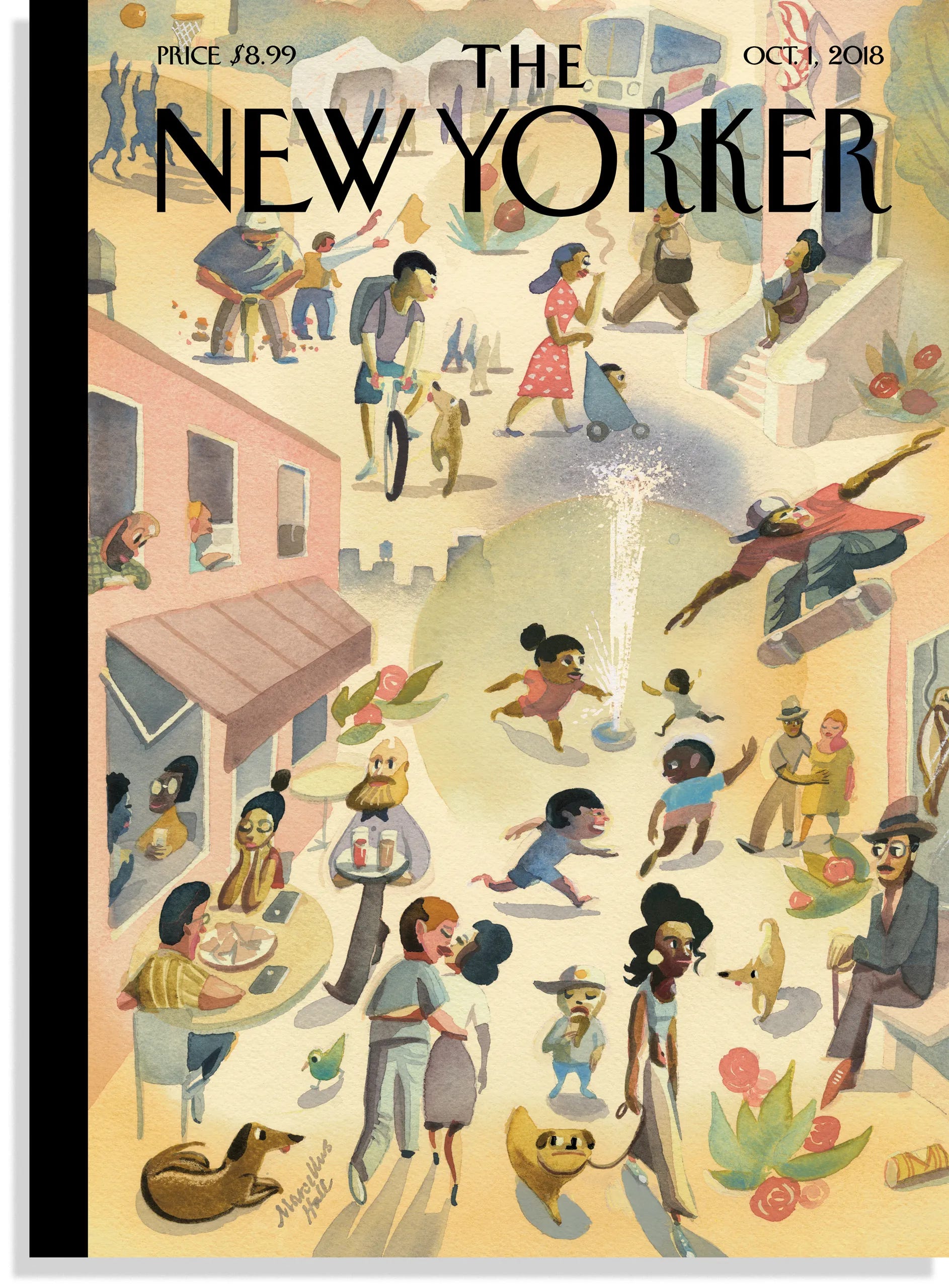
She does go on to admit that writing about the sidewalk ballet magnifies the energy of her street, that in reality, while there is still always something happening out on her sidewalk, the pulse is less frenetic and more peaceful. And that peace comes from so many different sets of eyes on the street — the sidewalks host a diverse yet integrated and equally invested community of people who want themselves and their neighbors to feel safe, who recognize the shared humanity within both friends and strangers. Sidewalks are the salve for the fears expressed by social scientists about the harm city life would inflict upon our society, as talked about in Part 1.
So where do we see sidewalks showing off their power? A few examples in…
1. Academia
One of my most favorite examples of research questions building off of existing work in creative and common sense ways is the 2023 Social Forces article Nicolo Pinchak and colleagues titled, “Paws on the Street: Neighborhood-Level Concentration of Households with Dogs and Urban Crime2.” They take Jacobs’ idea that more people on the street and out and about in their community makes the neighborhood safer and tests whether it translates to households with dogs. Dogs famously need to be walked, so do their exercise and bathroom needs help reduce crime in their neighborhood? Because there is more of this sidewalk ballet going on when there are more dogs and their owners walking around town, are more canine-filled neighborhoods safer than those with fewer pups?
2. Television
If you’re a Millennial, you probably already thought of this example while reading about the sidewalk ballet: Hey Arnold! This Nickelodeon show presented urban living for kids as idyllic — as the creator says in a 2017 interview reflecting on the show,
The pitch was very simple: Arnold lives in a rundown old boarding house under a freeway overpass with his grandma and grandpa and a bunch of eccentric boarders. I tried to make them from different ethnicities, different places. Oskar’s from the Czech Republic, Mr. Hyunh’s from Vietnam. It was the same with all the kids, we have a couple of Jewish kids, some black kids, some Asian kids and so on. It was meant to show, it’s no big deal and everybody just lives together and you show everyone getting along.
Arnold and his friends were living in the city — they faced challenges and urban legends and met all kinds of people, all while feeling safe and known within their community. A rare, but beautiful, thing.
3. Film
Yes, this is my second Notting Hill reference in two weeks, and no, I don’t intend on breaking the streak any time soon!!!
But this scene is the sidewalk ballet in action.
4. Real Life
While the escapism into thinking about dogs and cartoons and romantic comedies is needed, and offers legitimately good examples of Jane Jacobs’ theory in action, reality is presenting us with some harrowing, yet grounding, examples as well.
Let’s turn our attention to Minneapolis. Between the murder of Renee Good, the detainment of a five-year-old, raids of schools, threats to daycares, tear-gassing a family’s car filled with young children…it’s clear the government has abandoned its job to uphold basic human rights and ensure the safety and wellbeing of its people.
And despite this — or perhaps to spite this — Minnesotans are staying on the ground, in their communities, doing their neighborly part. The local surge of anti-ICE efforts is in many ways living out Jacobs’ idealized notion of community-led safety. As this NY Times article3 highlights:
[T]he city’s defiance toward the thousands of federal agents surging into Minneapolis also looks like this: local people using their cars, whistles, phones and local networks to monitor and confront the agents wherever they can, sticking close to them to complicate their efforts, like cornerbacks guarding wide receivers…Several white protesters and volunteers said they felt that they had a special responsibility to stand up for neighbors who they said would be vulnerable to targeting by ICE.
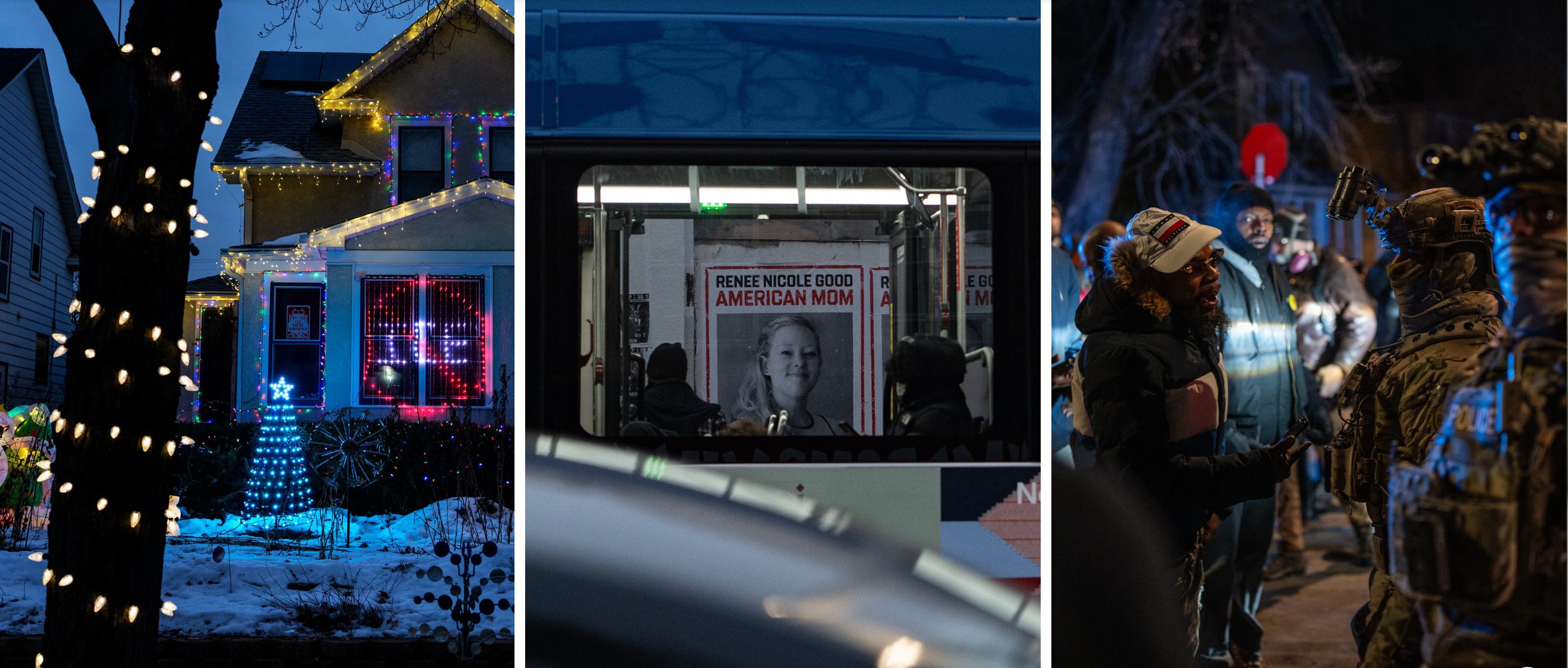
Or this reporter’s notes from the frontline (trust me — it’s worth scrolling through to the end):
The people of Minneapolis know that the only way to truly protect themselves is by protecting each other. They’re utilizing the integrated networks of city neighborhood living to monitor, warn, and respond to threats — just like Jacobs saw in 1950s New York (though in a much lower-stakes way, one that did not face the life-or-death, freedom-or-detainment, liberty-or-subjugation crises we’re seeing across the nation but highlighted in Minneapolis today).
It shouldn’t be this way4. But right now, it is. So take care of yourselves, your neighbors, and your sidewalks — this weekend, and always.
PBS’s New York: A Documentary Film is a great watch for learning about urban history, planning, policy, etc. and has some particularly great segments on Robert Moses (and because PBS is such a thoughtful media outlet, they have curated the clips on Moses along with other teaching and learning resources here. Check it out!)
unfortunately not open access but linking so you can read the abstract — maybe this would be a good sample article to try finding through your local public or university library, or reaching out to the authors, if you, too, find this interesting!
this is a gift article, so you should be able to read it even without a subscription.
Really. There has been a lot of recent writing about the dangers of the DIY society (of particular note, the public writing of sociologist Jess Calarco and her most recent book, Holding It Together: How Women Became America’s Safety Net, and this all-at-once absurd, terrifying, funny, and anxiety-inducing article from The Atlantic) but add to that the rapid shift to authoritarianism and state-sanctioned violence against its own people, including children? It just should not be this way.